
A cyberattack does not wait for business hours, leadership availability, or a convenient time to review a policy.
For defense suppliers handling Controlled Unclassified Information (CUI), incident response must be operational, tested, monitored, and ready to execute immediately. A document stored in a shared folder is not an incident response capability. A policy that nobody has practiced is not preparedness. When an attacker is moving through your environment, every minute matters.
That is why CPE Level 2 operationalizes incident detection, analysis, containment, reporting, recovery, and evidence preservation inside a continuously managed environment.
CMMC 2.0 Level 2 Incident Response Is More Than a Written Plan
CMMC 2.0 Level 2 is based on NIST SP 800-171 Revision 2, covering 110 CMMC requirements and 320 assessment objectives. The Incident Response family contains three requirements:
-
IR.L2-3.6.1 : Incident Handling
Establish an operational incident-handling capability covering preparation, detection, analysis, containment, recovery, and user response activities. -
IR.L2-3.6.2 : Incident Reporting
Track, document, and report incidents to designated officials and authorities, both inside and outside the organization. -
IR.L2-3.6.3 : Incident Response Testing
Test the organizational incident response capability.
These requirements are deliberately practical. Assessors are not only looking for a policy. They may examine procedures, interview responsible personnel, and test mechanisms that demonstrate the capability works as intended.
The official DoD CMMC Level 2 Assessment Guide specifically connects assessment evidence to implemented controls, operational activities, mechanisms, and personnel. Paperwork can describe intent. Only a working capability demonstrates readiness.
The 72-Hour Reporting Clock Starts at Discovery
For contracts containing DFARS 252.204-7012, qualifying cyber incidents must be rapidly reported to the Department of Defense within 72 hours of discovery through the Defense Industrial Base reporting process.
The official DFARS 252.204-7012 text defines “rapidly report” as within 72 hours of discovery of any cyber incident. This is a contractual obligation: not a target to meet if convenient.
A capable incident response process must therefore answer critical questions immediately:
- Who determines whether an event is a reportable incident?
- Who has authority to declare and escalate an incident?
- Where are incident records maintained?
- Who prepares the DoD report?
- What contract numbers and CUI categories are affected?
- How are affected systems isolated without destroying evidence?
- How are forensic images, logs, and other records preserved?
- Who communicates with executives, customers, legal counsel, and government representatives?
DFARS 252.204-7012 also requires contractors to preserve relevant images of affected systems and monitoring data for at least 90 days from the submission of the cyber incident report, along with supporting DoD damage assessment and investigation activities.
If your team discovers an attack and must first assemble tools, locate credentials, identify responsible personnel, and determine what systems are in scope, valuable response time is already being lost.
How CPE Level 2 Turns Incident Response Into Daily Operations
CPE Level 2 combines hardened infrastructure, security configuration, policies, procedures, training, continuous monitoring, SIEM monitoring, managed operations, and ongoing maintenance.
That integration matters because incident response depends on everything that happens before an incident.
1. Continuous Monitoring Detects Indicators Early
CPE Level 2 continuously monitors the protected environment for functional and security issues. Monitoring provides visibility into activity that may indicate:
- Unauthorized access attempts
- Suspicious authentication behavior
- Unusual privilege escalation
- Malware execution
- Unauthorized changes to system configurations
- Suspicious inbound communications
- Potential data exfiltration
- Abnormal activity outside normal operating patterns
- Audit logging failures
- Unauthorized use of systems or applications
This supports the intent of SI.L2-3.14.6, which requires monitoring organizational systems and inbound and outbound communications traffic to detect attacks and potential indicators of attack.
2. SIEM Monitoring Correlates Events Across the Enclave
Individual alerts rarely tell the entire story. A failed login may be harmless. A failed login followed by a successful login, privilege escalation, a new administrative account, and unusual outbound traffic is a different matter.
SIEM monitoring brings together relevant log sources so security personnel can correlate activity across systems. That supports the incident response process by helping analysts:
- Establish an accurate event timeline
- Identify affected users and systems
- Connect related indicators
- Distinguish isolated events from coordinated activity
- Prioritize containment
- Preserve relevant evidence
- Produce reports for management and authorized authorities
This also supports the broader audit and accountability requirements in CMMC 2.0 Level 2, including log creation, protection, review, correlation, and reporting.
3. 24/7 Managed Operations Reduce Response Delays
Attackers do not limit themselves to Monday through Friday. A defense supplier that only reviews security alerts during business hours may remain exposed for an extended period before anyone recognizes a serious incident.
Planet Security’s 24/7 managed operations and security monitoring provide ongoing oversight of the enclave. The objective is direct: identify suspicious behavior, escalate meaningful events, support containment, and maintain operational continuity while the incident is investigated.
This is the difference between owning security tools and operating a security capability.
4. Evidence Collection Supports Reporting and Investigation
Incident response requires more than stopping malicious activity. Your organization must also understand what happened, what was affected, and what evidence must be retained.
CPE Level 2 supports a structured process for preserving:
- Security event logs
- Authentication records
- Network and system activity
- Configuration changes
- Malware findings
- Affected system information
- Incident timelines
- Response actions
- Recovery activities
- Lessons learned and corrective actions
If logs are incomplete, inaccessible, or overwritten, your ability to report accurately and support a DoD investigation is weakened.
5. Testing Exposes Weaknesses Before an Attacker Does
IR.L2-3.6.3 requires testing the incident response capability. Effective testing can include tabletop exercises, walkthroughs, simulations, technical validation, and full or partial interruption exercises.
Testing should verify that:
- Personnel understand their roles
- Escalation paths are current
- Contact information is accurate
- Security tools generate actionable alerts
- Incident tickets are created and tracked
- Communications procedures work
- Reporting responsibilities are understood
- Evidence preservation procedures are executable
- Recovery decisions are documented
- Lessons learned become corrective actions
A test that reveals a weakness is a success. It gives you the opportunity to fix the problem before the real incident.
AI-Enabled Security Without Exposing Client Data
Generic AI tools cannot be trusted with client data, CUI, contract information, sensitive system details, or protected operational records. Sending raw client information to a public or broadly shared AI service creates unacceptable confidentiality and supply-chain risk.
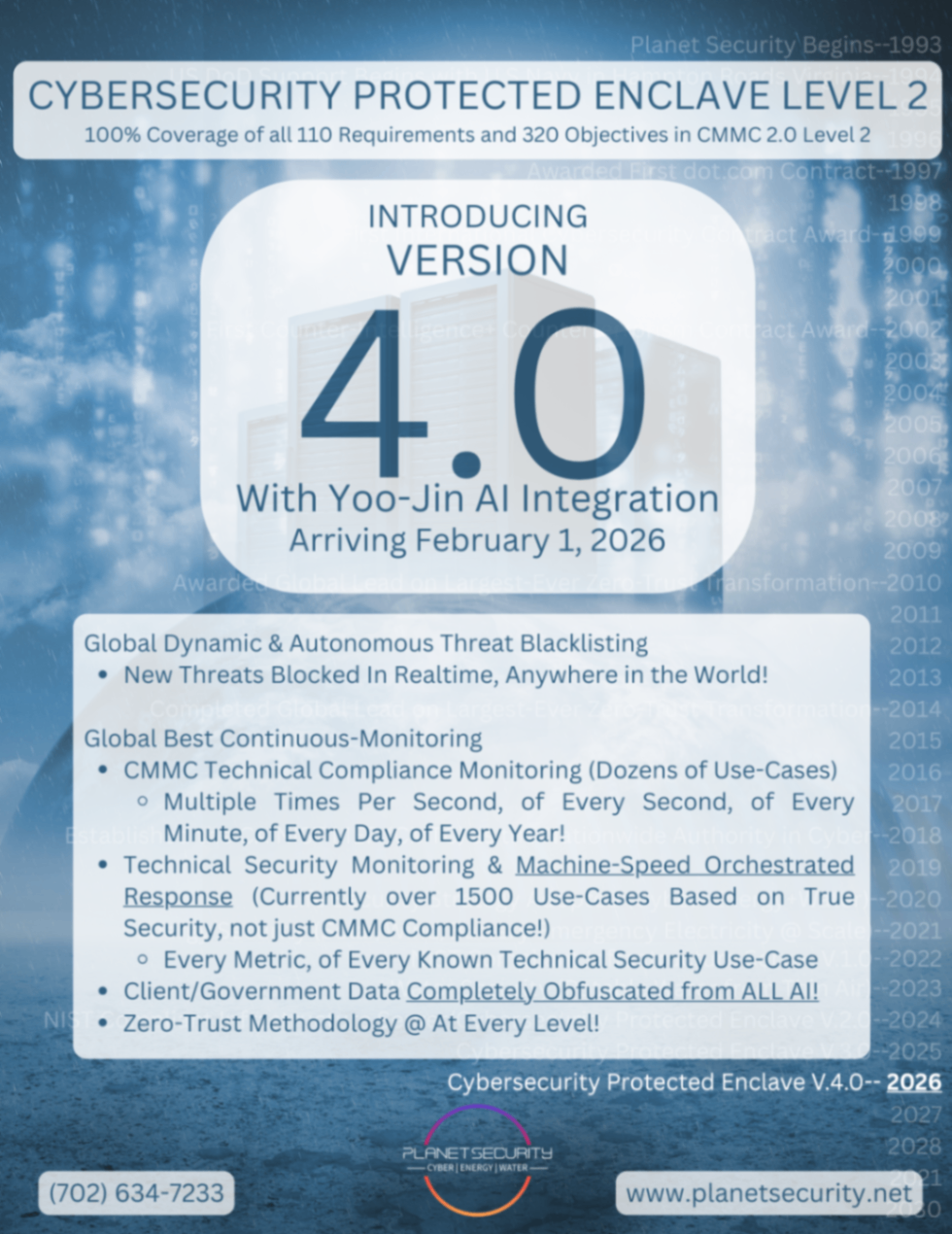
Planet Security differentiates its AI-enabled workflows through AI-obfuscated data. Security operations can use machine assistance while protecting the underlying client information from exposure to generic Big-Tech AI systems. The goal is to gain analytical speed without surrendering control of sensitive data.
AI assistance does not replace accountable security personnel. It supports detection, prioritization, correlation, and operational awareness while human experts remain available for decisions, escalation, and customer support.
What Defense Suppliers Should Have Ready Before an Attack
Every organization handling CUI should be able to produce and execute an incident response workflow containing:
- A current incident response plan
- Defined incident categories and severity levels
- Named roles and responsibilities
- Internal and external notification procedures
- DoD reporting procedures where DFARS 252.204-7012 applies
- A 72-hour reporting workflow measured from discovery
- Evidence preservation procedures
- System isolation and containment procedures
- Backup and recovery procedures
- Legal and executive escalation paths
- Incident documentation and ticketing
- Post-incident review and corrective action
- Periodic testing and training records
With CPE Level 2, these activities are integrated into a managed operating model rather than left to an overstretched internal team.
FAQ: CMMC 2.0 Level 2 Incident Response
What are the CMMC 2.0 Level 2 Incident Response requirements?
The IR family contains three requirements: IR.L2-3.6.1 for incident handling, IR.L2-3.6.2 for incident reporting, and IR.L2-3.6.3 for incident response testing.
Does CMMC itself create the 72-hour reporting requirement?
The 72-hour requirement comes from contractual language, particularly DFARS 252.204-7012. CMMC incident reporting requirements help ensure the organization has the capability and procedures to meet applicable contractual obligations.
Is a written incident response plan enough?
No. A written plan is only one part of the requirement. Your organization must demonstrate that it can detect, analyze, contain, recover from, document, report, and test its incident response capability.
How does SIEM monitoring help?
SIEM monitoring correlates events from multiple systems and helps security personnel identify patterns that may not be visible in isolated logs. This supports investigation, prioritization, reporting, and evidence preservation.
Can generic AI tools be used to analyze CUI incidents?
Organizations should not place client data or CUI into generic AI tools. Planet Security uses AI-obfuscated data for AI-enabled security workflows so the benefits of machine-assisted analysis do not require exposing raw client information.
How quickly can CPE Level 2 be deployed?
Deployment depends on scope, architecture, user count, facility requirements, and organizational readiness. Planet Security’s published technical information describes implementation commonly occurring within approximately 4–8 weeks, with expedited options available for qualifying environments. See the CPE Level 2 technical details.
Be Ready Before the Attack Happens
Incident response is not a document. It is a continuously exercised capability.
Defense suppliers need security infrastructure that detects suspicious activity, preserves evidence, supports clear decision-making, and enables timely reporting to the DoD when required. CPE Level 2 brings together the technology, monitoring, SIEM operations, managed services, procedures, training, and compliance evidence needed to keep your organization ready.
There is no substitute for operational readiness.
We welcome a discussion on how we may assist in your CMMC success story!
| planetsecurity.net | 702.634.7233 |  |
|---|---|---|
| Visit our website | Call for assistance | Scan to connect |