CMMC flow-down obligations do not stop because a third-party assessment phase has been paused. If your organization processes, stores, or transmits Federal Contract Information (FCI) or Controlled Unclassified Information (CUI), your cybersecurity responsibilities remain active: regardless of whether you are a prime contractor, Tier 1 subcontractor, or a supplier several levels down the chain.
Under 32 CFR 170.23, CMMC requirements apply throughout the supply chain at every tier. DFARS 252.204-7021 requires contractors to flow down the appropriate CMMC requirements and verify subcontractor status before award.
The pause in the Phase 2 C3PAO requirement is not a pause in supply-chain compliance. Subcontractors handling CUI still face CMMC Level 2 (Self) minimums, the full 110 requirements of NIST SP 800-171 Rev. 2, SPRS reporting, and continuing affirmation obligations.
The Compliance Question Is Not “What Tier Are We?”
The real question is:
What information will your organization process, store, or transmit while performing the subcontract?
Your position in the supply chain does not determine your cybersecurity obligations. The data does.
If your organization handles FCI only
A subcontractor processing, storing, or transmitting FCI: but not CUI: generally requires CMMC Level 1 (Self) under 32 CFR 170.23.
If your organization handles CUI
A subcontractor processing, storing, or transmitting CUI requires at least CMMC Level 2 (Self).
If the associated prime contract requires CMMC Level 2 with a C3PAO assessment, the subcontractor must meet CMMC Level 2 (C3PAO) requirements. If the prime contract requires Level 3, the applicable subcontractor minimum is generally CMMC Level 2 (C3PAO) unless the Department of Defense provides different specific guidance.
There is no “too small,” “too remote,” or “too far down the chain” exception for a supplier handling CUI.
Phase 2 Is Suspended. Your CUI Responsibilities Are Not.
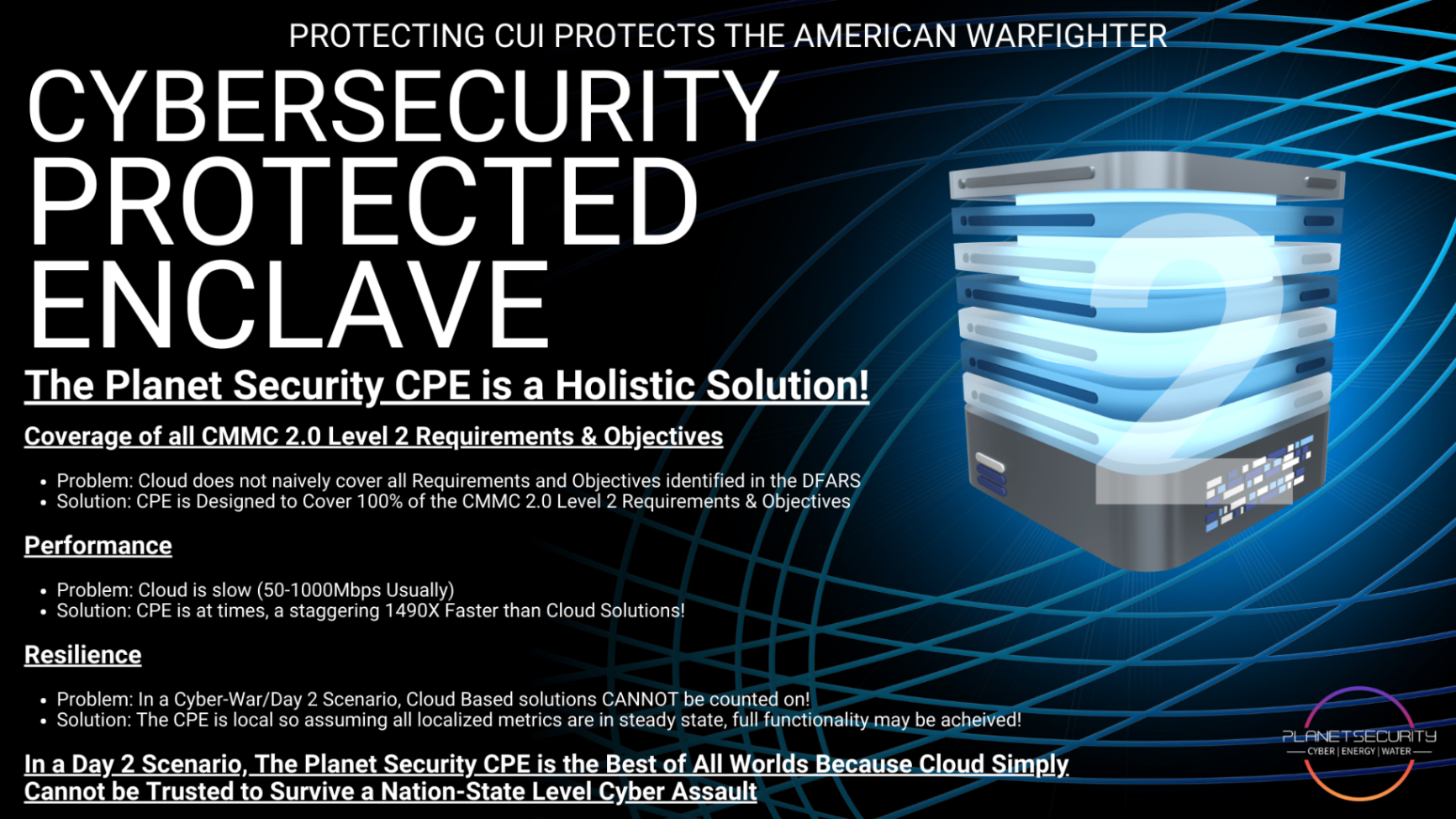
As of this writing, the Department of Defense has suspended the Phase 2 C3PAO requirement pending program review. That may affect when certain contracts require third-party certification.
It does not eliminate the obligations that already apply to CUI-handling contractors and subcontractors, including:
- Implementing the 110 requirements of NIST SP 800-171 Rev. 2
- Completing the applicable CMMC Level 2 (Self) assessment
- Calculating the DoD Assessment Methodology score
- Posting the current assessment score in the Supplier Performance Risk System (SPRS)
- Maintaining an annual affirmation of continuous compliance
- Protecting CUI across people, processes, technology, and facilities
- Providing evidence that security controls are implemented and operating
- Maintaining a current CMMC status before applicable subcontract award
The current DFARS clause makes the prime responsible for ensuring downstream subcontractors maintain the appropriate CMMC status. It also requires the substance of the clause to flow down into qualifying subcontracts involving FCI or CUI.
A regulatory pause may change the assessment path. It does not make an unprotected CUI environment acceptable.
Why Primes Are Looking at the Entire Supply Chain
A prime contractor cannot maintain a credible cybersecurity posture if a downstream supplier introduces unmanaged risk.
A single subcontractor with weak access controls, incomplete logging, unmanaged endpoints, or poor incident-response procedures can expose the prime to:
- CUI loss or unauthorized disclosure
- Contract-performance disruption
- Ransomware and extortion
- Intellectual-property theft
- Adversary access through trusted relationships
- Delayed awards or subcontract termination
- Inaccurate SPRS reporting
- Failed assessments
- Reputational damage with government customers
Prime-contractor compliance now depends on supply-chain execution. Primes need suppliers that can demonstrate clear boundaries, controlled workflows, documented procedures, and a current compliance status: not suppliers that promise to begin remediation after award.
For small and mid-tier defense suppliers, this creates an urgent competitive issue. A prime may prefer a supplier that is already operating inside a defensible CUI environment over one that still relies on a spreadsheet, informal policies, or a collection of disconnected security tools.
The Turnkey Path: CPE Level 2
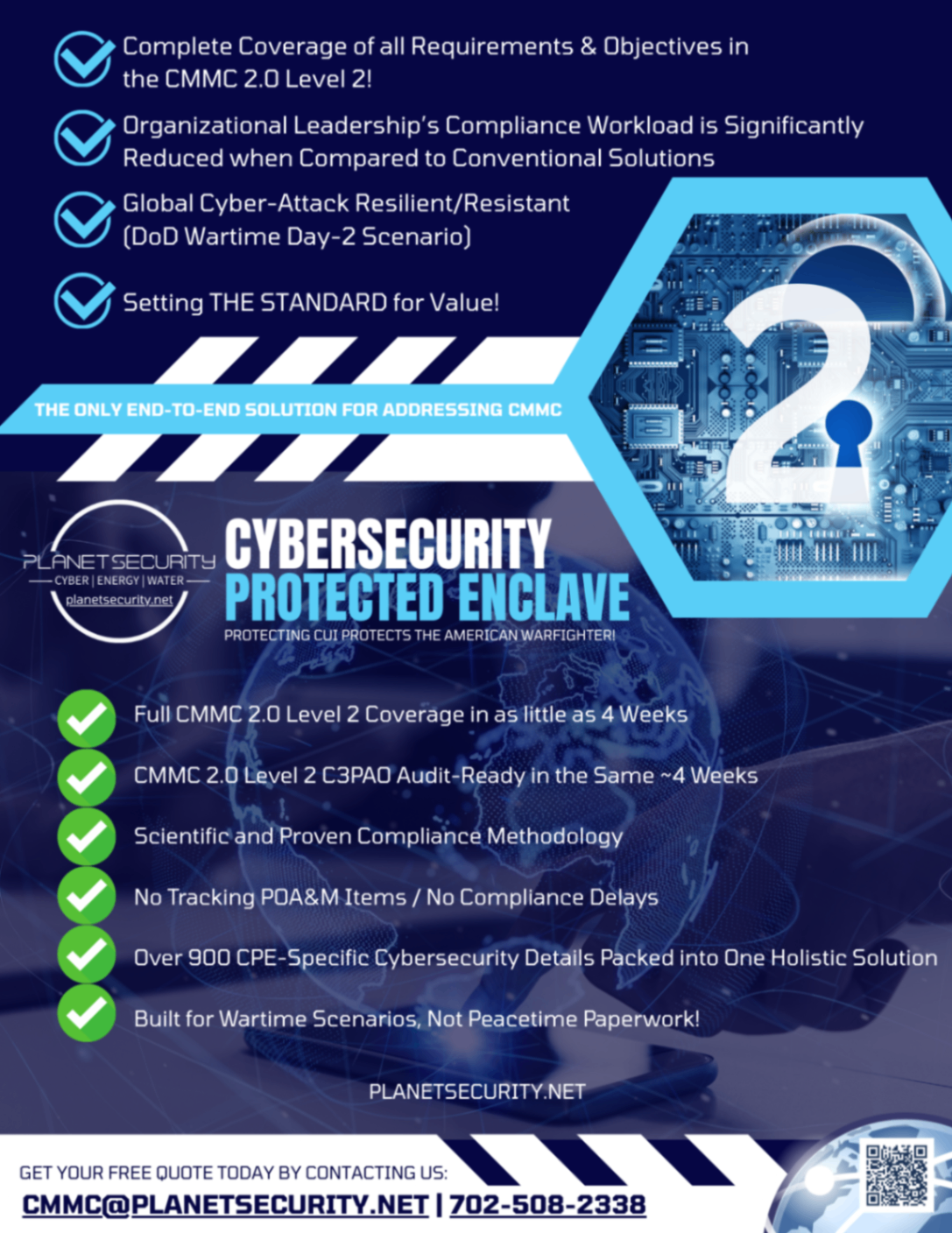
CPE Level 2 is designed for defense suppliers that need a practical, controlled, and execution-driven path to CMMC 2.0 Level 2 readiness.
It combines infrastructure, security configuration, operational procedures, policies, training, monitoring, and ongoing support in one integrated environment.
The objective is complete coverage: not partial remediation and not an endless consulting project.
CPE Level 2 is engineered to provide 100% coverage of all 110 CMMC requirements and 320 assessment objectives associated with CMMC 2.0 Level 2.
Core capabilities include:
- CUI-focused system boundaries
- Hardened server and endpoint configurations
- Network segmentation and security reference architecture
- Identity, authentication, and least-privilege controls
- Encryption for data at rest and in transit
- Centralized logging and security monitoring
- Vulnerability management and patching
- Backup and recovery capabilities
- Incident-response procedures
- Security policies and procedures
- Security awareness and insider-threat training
- Evidence collection and compliance reporting
- Ongoing managed operations and maintenance
- Continuous technical compliance monitoring
- vCISO guidance and leadership support
- Audit and assessment preparation
- Procedures for hard-copy CUI and physical media
- Optional resilience enhancements for demanding operating environments
This is not simply a software subscription. It is a complete operating environment designed to protect CUI and support defensible compliance.
AI-Enabled Security Without Handing Over Client Data
Generic AI tools cannot be trusted with CUI, proprietary client information, technical data, or sensitive government-related workflows.
Organizations that copy sensitive data into public or Big-Tech AI platforms may create additional risks involving:
- Data retention
- Model training
- Access governance
- Unknown downstream processing
- Cross-tenant exposure
- Inadequate contractual protections
- Loss of visibility over where information travels
Planet Security takes a different approach through AI-obfuscated data.
Yoo-Jin AI supports security and compliance workflows without accessing client data directly. AI-enabled operations can assist with monitoring, threat analysis, configuration validation, evidence workflows, and response orchestration while maintaining a strict separation between sensitive information and AI processing.
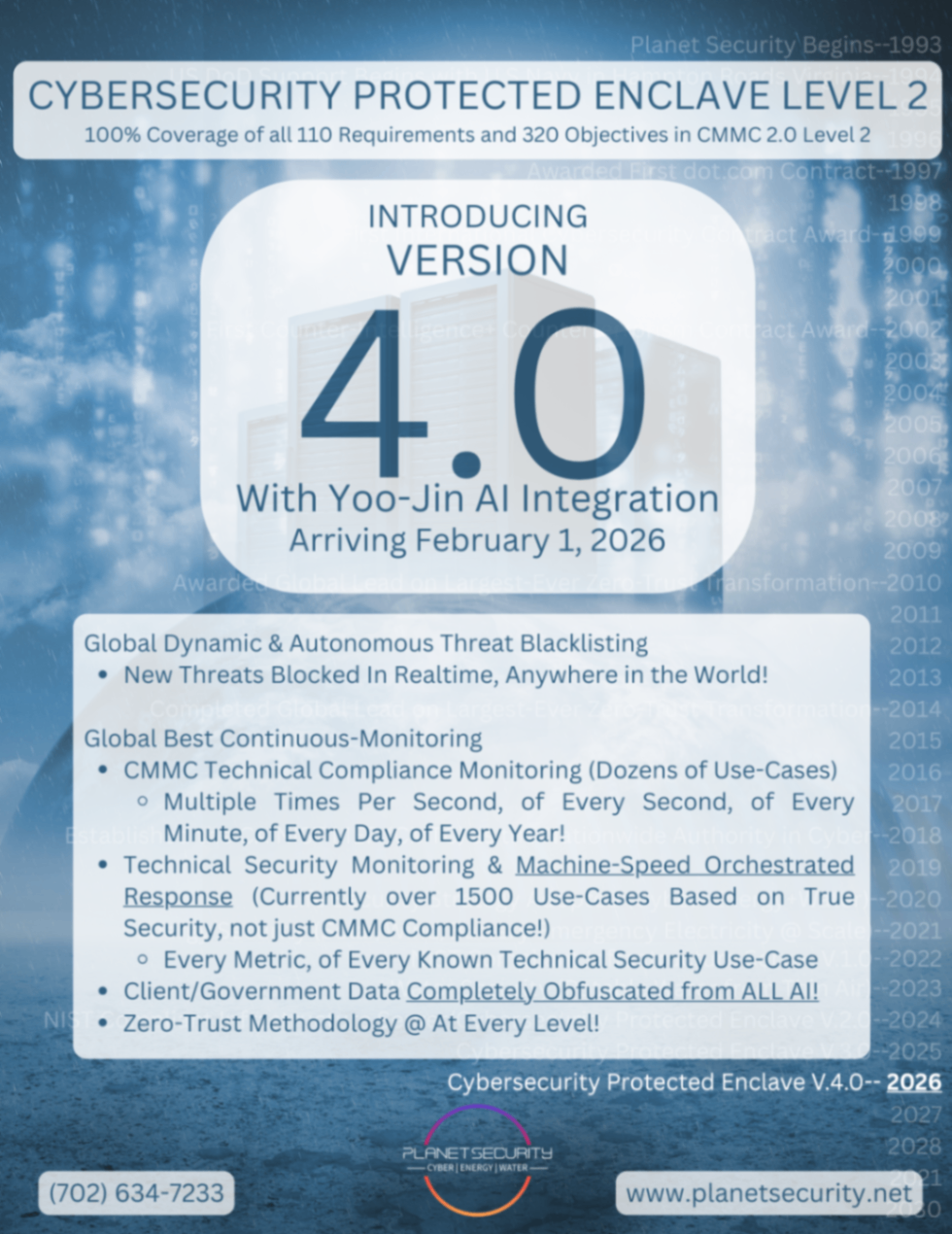
The principle is direct: use AI to improve security operations, but do not give generic AI tools the data you are obligated to protect.
A Deployment Timeline Built for Subcontractor Urgency
Most CPE Level 2 deployments can be completed within approximately 4–8 weeks, depending on user count, CUI scope, migration needs, workflow complexity, and organizational responsiveness.
Weeks 1–2: Scope and Foundation
- Identify CUI workflows and users
- Confirm system boundaries
- Establish access requirements
- Configure the protected environment
- Align policies and procedures
Weeks 3–4: Security Implementation
- Apply hardened configurations
- Implement identity and access controls
- Configure logging and monitoring
- Validate encryption and backup processes
- Begin evidence collection
Weeks 5–8: Validation and Operational Readiness
- Test procedures and response workflows
- Resolve configuration issues
- Review documentation
- Validate evidence against requirements
- Prepare the team for ongoing compliance
For organizations that need a predictable service model, CPE Level 2 is available at $1,299 per month for up to 20 users. That monthly service includes the protected enclave, managed operations, security monitoring, patching, backup support, compliance assistance, training support, and vCISO-level guidance.
Choosing an 8-week deployment instead of a 4-week deployment reduces pricing by $100 per month. Deployment length should be selected based on the supplier’s CUI scope, staffing, migration requirements, and award timeline: not simply on price.
FAQ: What Subcontractors Need to Know
Does the Phase 2 suspension remove CMMC requirements for subcontractors?
No. CUI-handling subcontractors still face the applicable CMMC Level 2 minimums, NIST SP 800-171 Rev. 2 requirements, SPRS obligations, and annual affirmation responsibilities.
Do flow-down requirements apply to every subcontractor tier?
Yes. Under 32 CFR 170.23, CMMC requirements apply to prime contractors and subcontractors throughout the supply chain at every tier when they process, store, or transmit FCI or CUI on contractor information systems.
What must a CUI-handling subcontractor have before award?
The subcontractor should have the applicable current CMMC status and, for the CMMC Level 2 (Self) path, a current NIST SP 800-171 DoD Assessment score entered in SPRS. The prime or higher-tier contractor must verify the appropriate status before awarding the subcontract.
Does CPE Level 2 guarantee certification?
No technology or service can replace the organization’s responsibility to operate its environment, maintain accurate information, and complete the applicable assessment process. However, CPE Level 2 is engineered to provide 100% coverage of the 110 requirements and 320 objectives associated with CMMC 2.0 Level 2 and to support assessment readiness.
Why should a subcontractor act now?
Because primes are evaluating supply-chain risk now: not only when a C3PAO requirement appears in a contract.
Suppliers that wait may lose awards to competitors that can demonstrate a current, controlled, and defensible CUI environment.
Flow-Down Compliance Is a Business Requirement
CMMC flow-downs do not take a pause. Threat actors are not waiting for a policy review, and primes cannot afford to treat subcontractor cybersecurity as an afterthought.
If your organization handles CUI, the safest and most competitive decision is to establish the required environment before the next award opportunity arrives.
CPE Level 2 gives small and mid-tier defense suppliers a turnkey path to complete coverage, stronger security, better evidence, and greater confidence throughout the supply chain.
We welcome a discussion on how we may assist in your CMMC success story!
Contact Planet Security or call 702.634.7233.
| planetsecurity.net | 702.634.7233 | |
|---|