
For defense suppliers, CMMC assessment capacity is becoming a strategic business constraint.
The question is no longer simply, “Can we become compliant?” It is:
Will we be ready when a C3PAO assessment slot becomes available, or will we still be fixing basic control deficiencies while the assessment queue grows?
Industry reporting in 2026 commonly describes four- to twelve-month C3PAO booking lead times, with some organizations experiencing nine- to eighteen-month waits depending on location, complexity, and assessor availability. As CMMC 2.0 Level 2 requirements become more common in new DoD solicitations, demand will continue to rise.
Cyber AB clarified in its June 2026 Town Hall recap that November 10, 2026, marks the beginning of Phase 2, not a universal deadline requiring every contractor to be certified on that date. But that distinction does not eliminate the capacity problem.
When more suppliers begin pursuing assessments at the same time, the queue becomes the deadline.
The defense suppliers that prepare now will have a decisive advantage: when the C3PAO finally calls, they will be ready.
The C3PAO Capacity Problem Is a Timing Problem
There is an important distinction between available assessment capacity today and available assessment capacity when demand surges.
Cyber AB has stated that authorized C3PAO capacity is not uniformly booked under current demand. That does not mean suppliers should wait. It means the opportunity to secure an assessment window exists now, before more contractors enter the line.
Independent industry analyses have reported:
- Four to twelve months for many current booking windows
- Nine to eighteen months for some new clients and congested markets
- Potentially longer queues as Phase 2 requirements become routine
- Twelve to twenty-four months from starting readiness work to certification for organizations beginning from a low baseline
A C3PAO assessment is not a service you can reliably order at the last minute. Your organization must first complete scoping, implement the required controls, develop documentation, collect evidence, train personnel, and demonstrate that the environment is operating as designed.
If you wait until a contract requires certification, you may face two bottlenecks at once:
- Your internal remediation backlog
- The external C3PAO assessment queue
That combination creates unnecessary risk to contract awards, option years, teaming opportunities, and customer confidence.
Audit-Ready Means More Than Completing a Checklist
A spreadsheet showing completed controls is not the same as an assessment-ready environment.
C3PAOs need to evaluate whether your controls are implemented, operating, documented, and supported by reliable evidence. Your organization must be able to demonstrate that the security practices described in your System Security Plan are not merely planned for a future date.
That means readiness must be continuous.
You need to know, at any point:
- Whether required configurations remain in place
- Whether systems are patched and securely maintained
- Whether access controls are operating properly
- Whether audit logs are being generated and retained
- Whether security incidents are documented and handled
- Whether backups are functioning
- Whether policies and procedures match actual operations
- Whether evidence is current, organized, and defensible
The assessment window should be the final verification of a mature security program, not the first time anyone checks whether your controls work.
How CPE Level 2 Keeps You Continuously Ready
CPE Level 2 is designed for defense suppliers that need a complete, managed environment for protecting Controlled Unclassified Information.
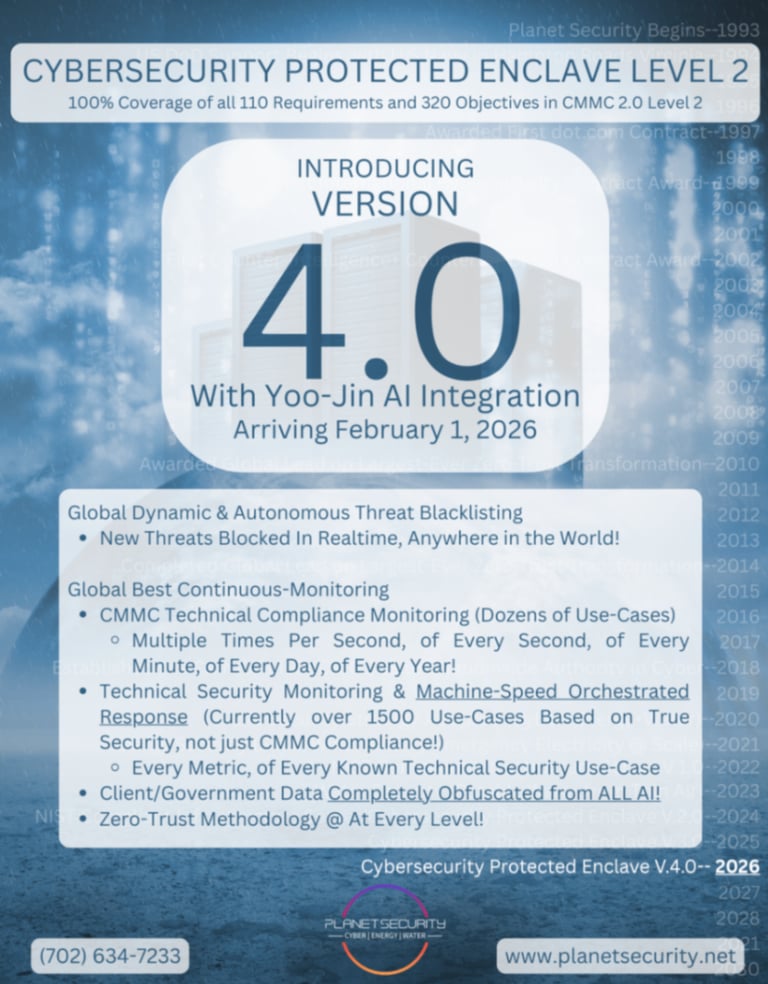
It provides 100% coverage of all 110 CMMC requirements and 320 assessment objectives associated with CMMC 2.0 Level 2 and NIST SP 800-171 Revision 2.

What That Means Operationally
1. Automated compliance evidence collection
Evidence is collected as part of normal system operations rather than assembled during an emergency preparation sprint. Configuration status, monitoring activity, access controls, system events, patching, and other compliance-relevant information can be documented continuously.
2. Continuous monitoring and reporting
A point-in-time gap assessment cannot tell you whether a control drifted three months later. Continuous monitoring helps identify deviations, security issues, and operational changes before they become assessment findings.
3. No recurring POA&M churn
The objective is not to maintain a permanent list of unfinished workarounds. CPE Level 2 is engineered to implement the required controls up front, verify them continuously, and reduce the recurring “fix it before the assessment” cycle that consumes internal teams.
4. More than 900 security configurations
The environment includes 900+ security hardening and compliance configurations designed to address the technical detail behind the CMMC requirements. That is the difference between claiming coverage and implementing the configuration depth necessary to support it.
5. On-premise or co-located deployment
Your enclave can be deployed on-premise or through a co-location model. This provides zero cloud risk for the enclave itself, avoids unnecessary dependence on public cloud infrastructure, and supports strong network segmentation and local operational resilience.
Review the CPE Level 2 technical details for additional information about architecture, encryption, segmentation, backups, support, and managed operations.
Yoo-Jin AI Handles the Heavy Lifting, Without Access to Your Client Data
Compliance work requires repetitive analysis, verification, reporting, and response. Most small and midsize defense suppliers do not have the staffing to perform all of that manually, every day, across every system.
That is where Yoo-Jin AI supports CPE Level 2.
Yoo-Jin can assist with:
- Continuous technical compliance monitoring
- Security configuration verification
- Threat intelligence and dynamic blacklisting
- Vulnerability identification and remediation workflows
- Audit trail documentation
- Compliance reporting
- Backup and recovery validation
- Security event analysis
- Zero-trust enforcement support
- More than 1,500 automated security and compliance use cases
But there is a critical difference between Yoo-Jin and generic AI tools.
Generic AI tools cannot be trusted with client data, intellectual property, financial information, personal information, or CUI. Sending sensitive business information into a Big-Tech AI system creates governance, privacy, and data exposure concerns that defense suppliers cannot ignore.
Planet Security uses AI-obfuscated data in Yoo-Jin workflows. Yoo-Jin performs the heavy lifting without receiving raw client data. This design sharply limits the ability of the AI system to expose or misuse sensitive information.
Learn more about Yoo-Jin AI and its privacy-first approach.
Deployment in as Little as Four Weeks
Time matters. Traditional remediation programs can take six to twelve months, or longer, before an organization is genuinely ready for a C3PAO.
CPE Level 2 can be deployed in as little as four weeks, with full implementation commonly achieved in approximately eight weeks depending on the environment, users, requirements, and deployment model.
The process is designed around execution:
- Define the enclave scope and identify the CUI boundary.
- Deploy the infrastructure, segmentation, and security configurations.
- Establish policies, procedures, training, monitoring, and evidence workflows.
- Validate continuous readiness and prepare for the C3PAO assessment.
This gives you the ability to pursue an assessment slot while your environment is already operating in a controlled, defensible state.
Frequently Asked Questions
Q: Is there really a C3PAO shortage?
A: The answer depends on timing. Cyber AB has stated that current assessor capacity is not fully utilized relative to current demand. However, industry reporting shows that many suppliers are already planning months ahead, and demand is expected to increase substantially as CMMC 2.0 Level 2 becomes routine in new solicitations.
Waiting for the shortage to become obvious is the wrong strategy.
Q: Do I need to be certified by November 10, 2026?
A: November 10, 2026, begins Phase 2 of CMMC implementation. It is not a universal certification deadline for every existing contract. However, new solicitations may routinely require a C3PAO assessment, and the DoD may apply requirements differently across contracts and option years.
Suppliers should prepare based on their pipeline, not merely a calendar date.
Q: What does “100% coverage” mean?
A: CPE Level 2 is designed to cover all 110 CMMC requirements and 320 assessment objectives for CMMC 2.0 Level 2. That coverage includes technical controls, infrastructure, policies, procedures, training, monitoring, evidence, and ongoing managed operations.
Q: Does continuous monitoring replace the C3PAO assessment?
A: No. Continuous monitoring supports readiness; it does not replace the independent assessment. It helps ensure that when your assessment window opens, your controls, records, and evidence are current and organized.
Q: What happens when the C3PAO finally calls?
A: You should not be starting remediation. You should be validating an environment that has already been hardened, monitored, documented, and maintained.
That is the peace of mind CPE Level 2 is built to deliver.
Do Not Wait for the Bottleneck
The C3PAO shortage is not only about the number of assessors. It is about the growing number of defense suppliers that will need assessment capacity at approximately the same time.
Your safest strategy is straightforward:
- Start readiness before the contract requirement becomes urgent.
- Scope CUI correctly.
- Secure your assessment window early.
- Use an environment built for complete coverage.
- Automate evidence collection.
- Monitor continuously.
- Eliminate recurring POA&M churn.
- Keep your organization ready while the queue moves.
When the C3PAO finally calls, you should be ready to answer: not asking for more time.
| planetsecurity.net | 702.634.7233 |  |
|---|
We welcome a discussion on how we may assist in your CMMC success story!