
The defense contracting landscape has fundamentally changed. With CMMC Phase 1 enforcement officially launched on November 10, 2025, defense suppliers are now operating under mandatory cybersecurity compliance requirements that will only intensify over the next three years. Prime contractors are ramping up supply chain oversight, and non-compliance is no longer an option.
If you’re a defense supplier handling Controlled Unclassified Information (CUI) or Federal Contract Information (FCI), understanding these enforcement realities isn’t just important: it’s critical for your survival in the defense industrial base. Here are the 10 essential facts every defense supplier must know right now.
1. CMMC Enforcement Is Already Here: No More Grace Periods
The Department of Defense officially launched mandatory CMMC enforcement on November 10, 2025. This isn’t a future requirement: it’s happening now. DoD contracting officers can include CMMC compliance clauses in new solicitations and contracts, and full mandatory applicability reaches 100% by November 2028.
The bottom line: If you haven’t started your CMMC compliance journey, you’re already behind schedule. Defense suppliers waiting for “more guidance” or hoping for delays are setting themselves up for contract exclusion.

2. Three-Tier Structure with Escalating Requirements Means Strategic Planning Is Essential
CMMC operates on three distinct levels with ascending risk and control obligations:
- Level 1: Basic safeguarding for FCI (15 requirements, self-assessment allowed)
- Level 2: Advanced protection for CUI (110 requirements, third-party assessment required after Phase 1)
- Level 3: Enhanced protection for the most sensitive CUI (110+ requirements, government-led assessment)
Most defense suppliers will need Level 2 compliance for CUI handling. This means implementing all 110 NIST SP 800-171 requirements plus additional CMMC-specific controls. The complexity isn’t just technical: it’s operational, requiring comprehensive documentation, governance structures, and continuous compliance monitoring.
3. Self-Assessments Are Temporary: Third-Party Assessments Become Mandatory Soon
During Phase 1 (November 2025–November 2026), contractors can submit self-assessments for compliance verification and post results in the Supplier Performance Risk System (SPRS). However, this grace period is rapidly ending.
Critical timeline: Beginning November 10, 2026 (Phase 2), self-assessments are no longer accepted for CUI contracts. Third-party C3PAO (Certified Third-Party Assessment Organization) assessments become mandatory for all Level 2 requirements.
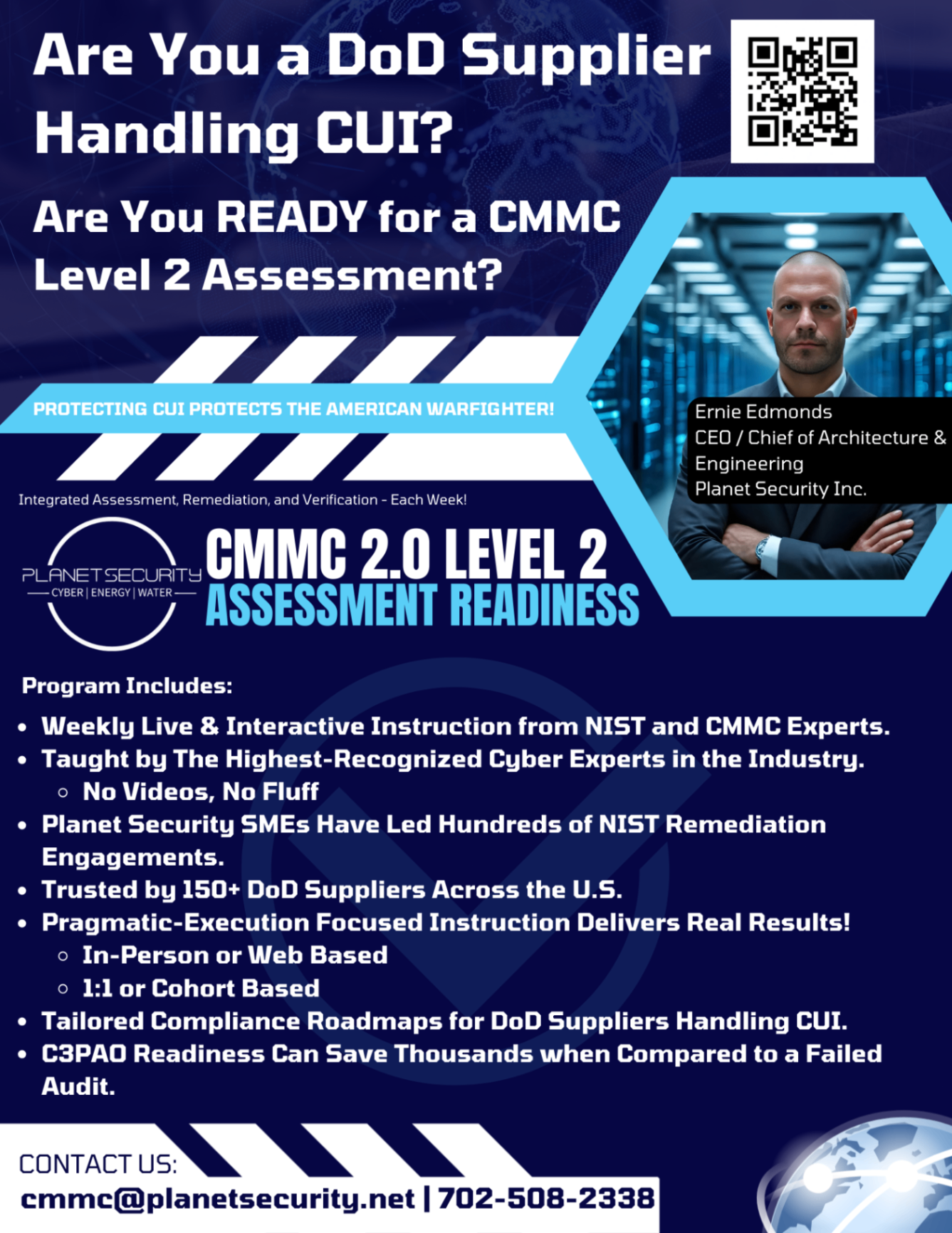
The implications are massive: You have less than 11 months to complete your compliance implementation and prepare for rigorous third-party assessment. Companies using Planet Security’s CPE Level 2 solution achieve assessment readiness in just 4 weeks, providing crucial time advantages.
4. Annual Affirmations and Continuous Compliance Are Now Operational Requirements
CMMC isn’t a one-time certification: it’s an ongoing operational commitment. Contractors must:
- Maintain CMMC status throughout the entire contract period
- Reaffirm compliance annually
- Update SPRS records continuously
- Report any changes or reassessments immediately
Assessment validity periods differ by level: Level 1 assessments require annual renewal, while Level 2 assessments require triennial renewal. This creates a continuous compliance cycle that many defense suppliers are completely unprepared for.
5. Contract Award Timing Creates Immediate Compliance Pressure
For contracts with award dates in 2026 or beyond, suppliers must already have valid CMMC certification. Contracting officers cannot award contracts without verified compliance, and expired assessments immediately invalidate contract eligibility.
The enforcement reality: Prime contractors are accelerating their supply chain verification processes. If you’re negotiating contracts with future award dates, compliance verification is happening right now, not later.
6. Prime Contractors Have Become Enforcement Agents
Prime contractors must verify subcontractor CMMC standing before awarding subcontracts at the required level. This creates cascading compliance obligations throughout the entire supply chain. Subcontractors face heightened scrutiny, and prime contractors have legal and operational responsibilities to ensure their suppliers meet compliance standards.
What this means: Prime contractors are implementing comprehensive supply chain cybersecurity verification programs. They’re auditing subcontractors more frequently, requiring detailed compliance documentation, and eliminating non-compliant suppliers from their vendor networks.
7. Enforcement Risks and Penalties Have Dramatically Increased
The Department of Justice’s Civil Cyber Fraud Initiative has announced settlements and enforcement actions at an increasing pace. Several major cases involve contractors who falsely certified CMMC compliance, resulting in significant financial penalties and exclusion from future contracts.
Recent enforcement patterns show:
- False certification penalties ranging from hundreds of thousands to millions of dollars
- Debarment proceedings for companies with repeated compliance failures
- Supply chain liability extending to prime contractors for subcontractor violations
With CMMC now mandatory, enforcement pressure will intensify exponentially. The DoD is developing automated compliance monitoring systems and real-time verification capabilities.
8. Supply Chain Compliance Verification Becomes Mandatory for All Participants
Organizations must create detailed plans regarding systems that process, store, or transmit FCI or CUI. Additionally, suppliers must provide CMMC information for all unique identifiers that handle sensitive data.
Operational requirements include:
- Complete system inventories for all CUI-handling infrastructure
- Flow-down compliance clauses for all subcontractors
- Continuous monitoring of supply chain compliance status
- Documented verification processes for subcontractor CMMC standing
Contractors can no longer treat supply chain compliance as a secondary concern: it’s now a primary operational requirement with direct contract implications.
9. Comprehensive Operational Changes Are Necessary Beyond Technical Controls
CMMC compliance requires fundamental operational transformations beyond implementing security controls. This includes:
- Streamlined assessment preparation processes
- Continuous compliance maintenance procedures
- Comprehensive documentation systems
- Governance structure establishment
- Third-party assessor coordination
- SPRS record maintenance
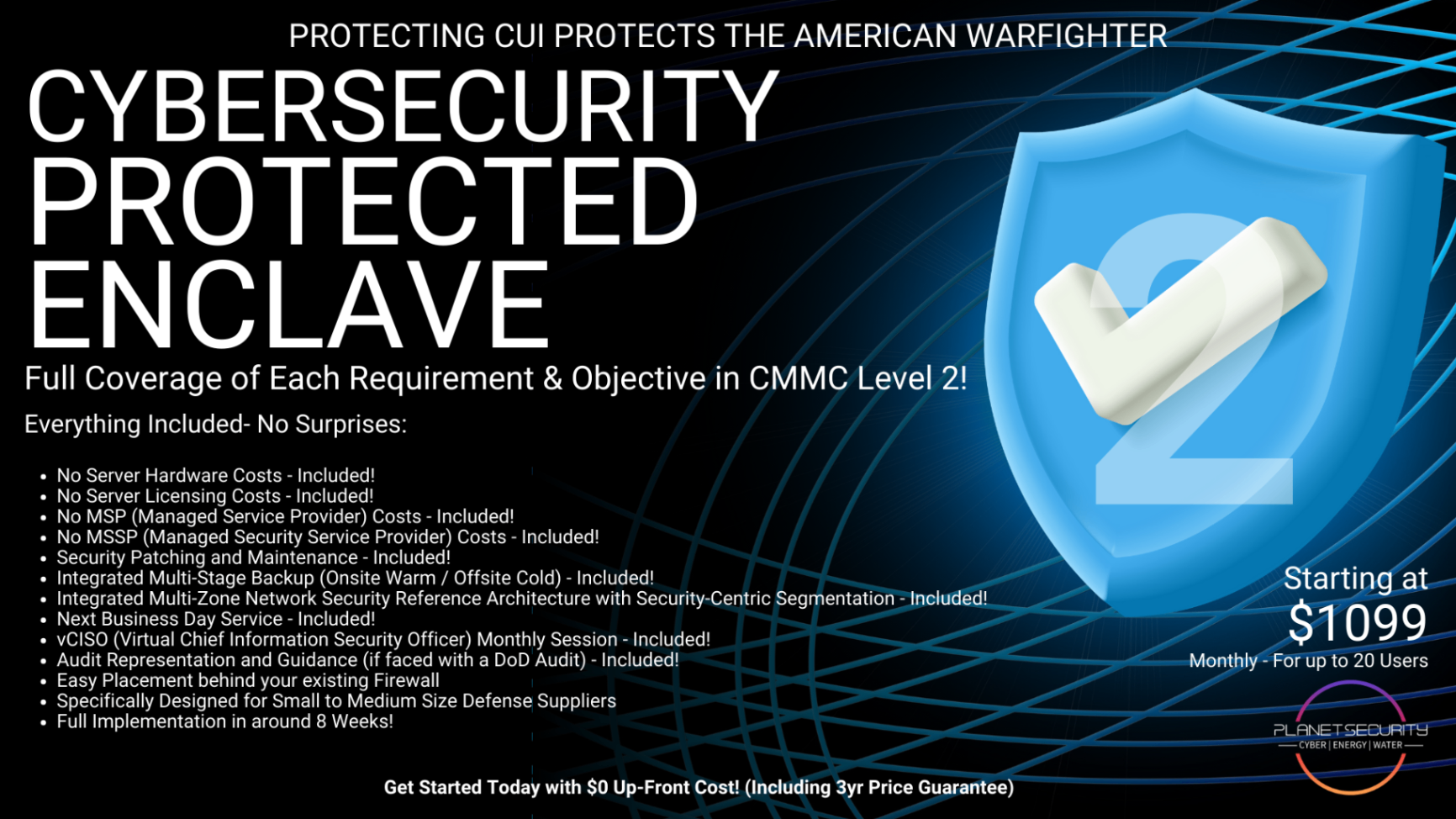
The operational complexity is why many defense suppliers are choosing turnkey solutions like Planet Security’s CPE Level 2, which provides complete operational and technical compliance in a single integrated solution.
10. Immediate Action Is Required: Delays Equal Contract Exclusion
Defense suppliers that haven’t begun CMMC preparation are already behind schedule, particularly those expecting to bid on contracts with award dates in 2026 or later. The window for compliance implementation is rapidly closing.
Essential immediate actions:
- Assess current cybersecurity posture against NIST SP 800-171 requirements
- Identify compliance gaps and remediation requirements
- Engage with qualified compliance partners or implement turnkey solutions
- Document all systems that handle FCI or CUI
- Establish governance structures for continuous compliance
The competitive advantage belongs to suppliers who achieve compliance quickly and maintain it consistently. Companies implementing Planet Security’s CPE Level 2 solution achieve full CMMC Level 2 compliance in 4 weeks, providing immediate contract eligibility and sustained competitive positioning.
Ready to Achieve CMMC Level 2 Compliance?
The enforcement reality is clear: CMMC compliance is no longer optional. Defense suppliers need comprehensive solutions that address both technical requirements and operational complexities. Planet Security’s CPE Level 2 provides complete CMMC Level 2 compliance with integrated technical controls, documentation, and ongoing support.
Don’t let CMMC enforcement eliminate your competitive position. The time for action is now.