The numbers don't lie. 62% of defense contractors pursuing CMMC 2.0 certification lack the governance controls necessary for CUI protection. That's not a small gap: that's a systemic failure across the defense industrial base.
With the CMMC Acquisition Rule now in effect since November 10, 2025, contractors who thought they could DIY their way to compliance or patch together traditional IT solutions are learning some very expensive lessons. Here's what over 50 defense suppliers discovered the hard way: and what you need to know before you make the same mistakes.
Lesson #1: The Governance Black Hole Swallows Everything
Here's the harsh reality: you can't audit your way out of a governance problem.
Most contractors started their CMMC journey by focusing on technical controls. They bought firewalls, implemented encryption, and deployed monitoring tools. But when assessment time came, they discovered something shocking: none of that matters if you don't have the governance framework to support it.

What went wrong: Contractors assumed CMMC was primarily a technical challenge. They invested in technology without establishing policies, procedures, documentation, and management oversight. When C3PAOs arrived for assessments, they found technical controls in place but no evidence of systematic governance.
The cost: Failed assessments, contract delays, and having to rebuild entire compliance programs from scratch. Average cost to recover? $85,000–$130,000 in additional consulting, remediation, and re-assessment fees.
Lesson #2: "Evolving Regulations" Isn't an Excuse: It's Your New Reality
78% of CMMC-pursuing contractors cite evolving regulations as their top challenge. But here's what the successful ones figured out: compliance isn't a destination: it's a continuous process.
The contractors who struggled treated CMMC like a one-time project. They'd scramble to meet requirements, pass an assessment, and then stop investing in their security posture. When regulations evolved (and they always do), these organizations found themselves scrambling again.
What the winners did differently: They implemented compliance infrastructures that adapt automatically to regulatory changes. They stopped treating security as a checkbox exercise and started viewing it as operational infrastructure.
Lesson #3: Your Supply Chain Is Your Weakest Link (And You're Probably Ignoring It)
This one shocked everyone: only 22% of CMMC organizations embed security requirements in supplier contracts.
Think about that. You're spending tens of thousands securing your own infrastructure, but you're handing CUI to suppliers with zero contractual security obligations. That's not compliance: that's liability transfer without actual risk mitigation.
Real-world example: A Tier 2 defense supplier invested $120,000 in their own CMMC compliance, achieved certification, then had their DoD contract suspended because a subcontractor they shared CUI with suffered a data breach. The prime contractor was held responsible: even though the breach didn't occur on their systems.
The lesson: Flow-down requirements aren't optional. If you handle CUI, every entity in your supply chain that touches that data must meet the same standards. Period.
Lesson #4: The Traditional Path Costs $130,000+ (And Still Fails)
Let's break down what the traditional CMMC compliance path actually costs:
- Hardware & infrastructure: $15,000–$35,000
- Software licensing: $8,000–$22,000 annually
- MSP/MSSP services: $3,600–$9,600 monthly
- vCISO consulting: $12,000–$36,000
- Assessment preparation: $15,000–$25,000
- C3PAO assessment: $15,000–$30,000
Total first-year cost: $130,150+
And here's the kicker: even after this investment, 40% of first-time assessments result in findings that require remediation and re-assessment.
Why? Because traditional approaches are fragmented. You're buying pieces from different vendors, hoping they work together, and gambling that you've covered all 110 CMMC 2.0 Level 2 assessment objectives.
Lesson #5: Encryption Isn't Binary (But Your Compliance Is)
19% of CMMC organizations tracking security metrics fall into low-encryption categories (≤50% coverage).
Here's what happened: contractors deployed encryption in some areas but not others. They encrypted data at rest but not in transit. They secured email but left file shares vulnerable. They thought partial encryption was better than nothing.
The C3PAO response: Partial compliance is non-compliance. You either meet the requirement or you don't. There's no partial credit in CMMC assessments.
Lesson #6: Legal Exposure Is Real (And It's Already Happening)
Now that the CMMC Acquisition Rule is in effect, the consequences for non-compliance or false certification are severe:
- Contract termination for default
- Suspension of work and payment withholding
- Disqualification from future contracts
- False Claims Act exposure for inaccurate certifications
- Bid protests from competitors questioning your compliance
One mid-sized defense contractor self-certified CMMC Level 2 compliance to secure a contract, only to have a competitor file a bid protest. During the investigation, significant gaps were uncovered. Result: contract termination, three-year debarment, and a $2.4 million False Claims Act settlement.
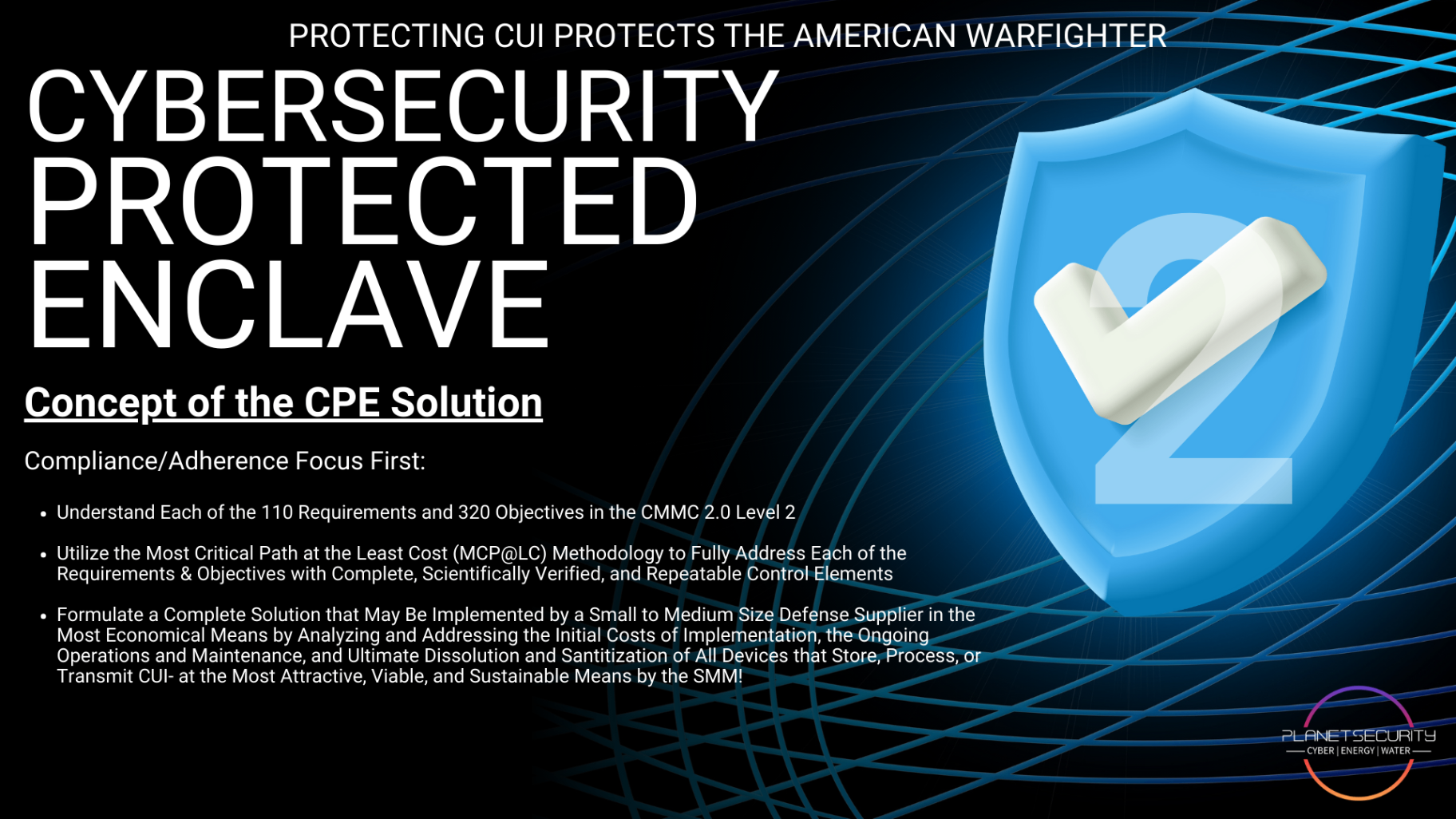
The Solution: Why CPE Level 2 Changes Everything
After watching dozens of contractors struggle through traditional compliance paths, the pattern became clear: the problem isn't the standard: it's the fragmented approach to meeting it.
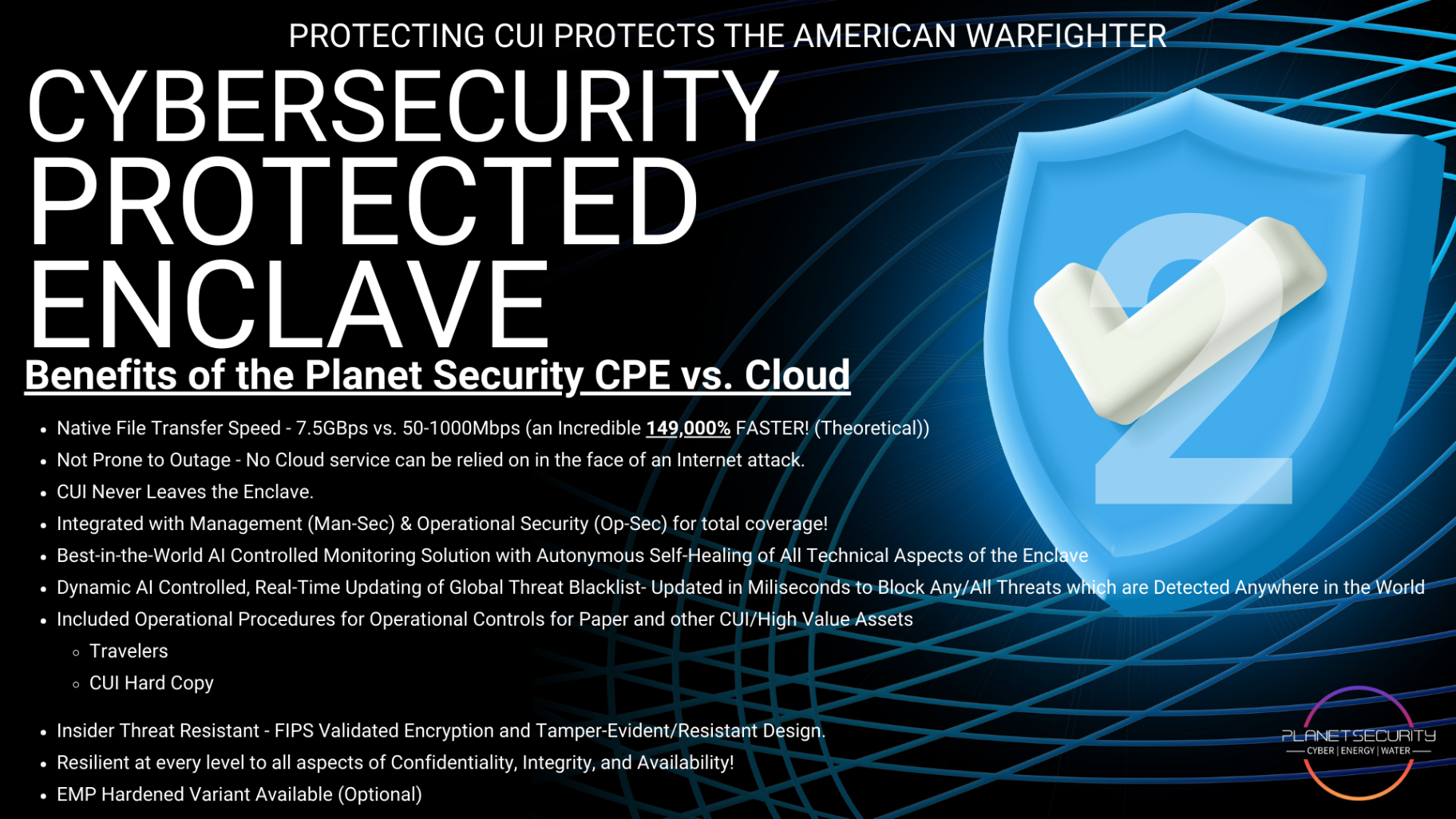
CPE Level 2 provides 100% coverage for all CMMC 2.0 Level 2 assessment objectives in a single, integrated solution. No gaps. No guessing. No fragmentation.
What Makes CPE Level 2 Different:
Complete Integration: Hardware, software, MSP/MSSP, security patching, backup, network segmentation, vCISO, and audit support: all designed to work together from day one.
Verified Performance: Achieves a SPRS score of 110, the highest possible rating in the DoD Assessment Methodology.
Rapid Deployment: 4-week rollout from contract signature to full operational capability. Compare that to 6–12 months for traditional implementations.
Predictable Costs: $1,299/month includes expedited deployment with no up-front costs. No surprise fees. No hidden charges. No capital expenditure requirements.
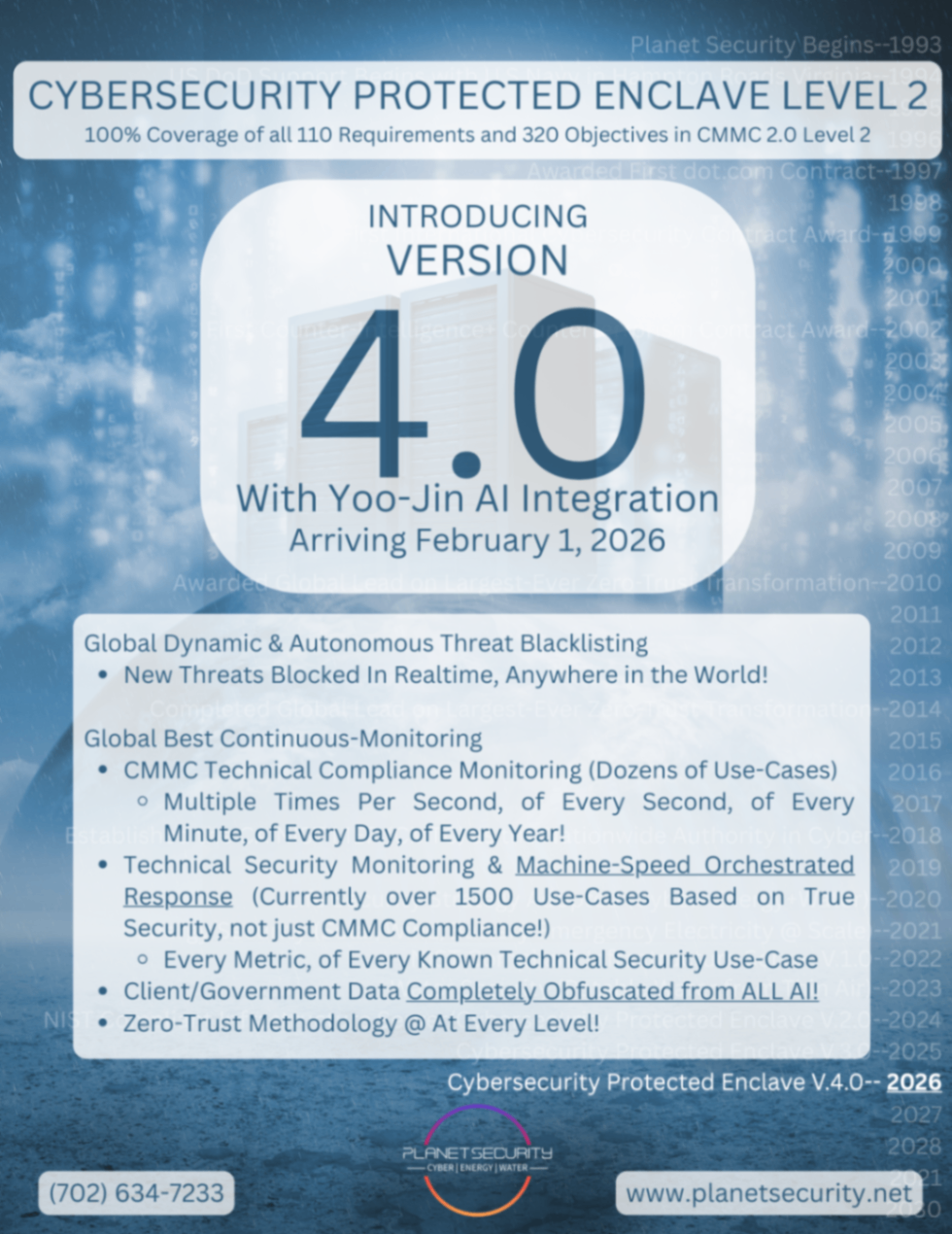
Future-Proof Technology: Version 4.0 now includes Yoo-Jin AI with zero-trust methodology and global dynamic threat blacklisting. Your compliance infrastructure automatically adapts to emerging threats and evolving requirements.
The Bottom Line: Learn From Others' Mistakes
The 50+ defense contractors we've worked with all learned the same lesson eventually: you can't DIY your way to CMMC compliance without massive cost, complexity, and risk.
The successful ones stopped trying to piece together solutions from multiple vendors. They stopped gambling on whether they'd covered every assessment objective. They stopped treating compliance as a one-time project.
They deployed CPE Level 2 and moved on with their business.
If you're still struggling with CUI protection, if you've been quoted $100,000+ for traditional compliance solutions, or if you're worried about passing your C3PAO assessment: there's a better path.
CPE Level 2 delivers 100% CMMC 2.0 Level 2 compliance in 4 weeks for $1,299/month. No up-front costs. No compliance gaps. No more learning the hard way.
planetsecurity.net | [QR Code]