Let’s get one thing straight: CMMC is no longer an IT project. If you’re still treating it like a "set it and forget it" task for your tech team, you are walking into a legal buzzsaw.
The Department of Justice (DOJ) has made its stance clear through the Civil Cyber-Fraud Initiative. They are using the False Claims Act to go after defense contractors who claim they are compliant when they aren’t. When a senior official signs that attestation, they aren't just saying "I think we're secure." They are legally certifying that every single one of the 110 CMMC 2.0 Level 2 requirements and 320 objectives is met.
If you’re guessing, you’re losing. Here are the 7 biggest mistakes contractors are making right now and how to fix them before the DOJ knocks on your door.
1. Treating Attestation as a "Check-the-Box" Exercise
The biggest mistake is thinking the annual attestation is just a formality. It’s not. It is a legal representation to the U.S. Government.
If you sign that document knowing, or even should have known, that your SPRS score is inflated or your policies aren't actually being followed, you are committing fraud. The DOJ doesn't care if your IT guy told you "it's fine." The liability sits with the executive who signs. Without real-time data and automated logs to back up your claims, your attestation is a house of cards.
2. "Attestation Without Evidence" (The Receipt Trap)
Imagine the IRS audits you and you have zero receipts for your deductions. That’s what happens during a CMMC audit or a DOJ investigation.
Many contractors have a written policy that says, "We monitor logs daily." But when asked for the logs, they realize the system hasn't been recording them for months. Attestation without evidence is a trap. You need the "receipts", automated, tamper-proof logs that prove compliance was happening every single day, not just the day you signed the paper.
This is where our CPE Level 2 changes the game. It provides continuous technical compliance monitoring, essentially generating your receipts automatically so you never have to worry about an audit.
3. Misunderstanding the Scope of CUI
If you don't know exactly where your Controlled Unclassified Information (CUI) lives, you can't protect it. Most contractors either over-scope (which is expensive) or under-scope (which is a one-way ticket to a failed audit).
Under-scoping is the dangerous one. If the DOJ finds CUI on an unhardened personal laptop or a generic cloud drive that you didn't include in your attestation, your entire certification is void. You need a defined boundary. A CPE Level 2 creates a "secure room" for your data, ensuring nothing leaks out and everything inside is 100% compliant.
4. Relying on "Generic" Managed Services
Standard MSPs (Managed Service Providers) are great for fixing printers, but they are often out of their depth with NIST SP 800-171 and CMMC.
Just because your provider uses a "cloud" doesn't mean it's a FedRAMP High or Moderate environment configured for CMMC. If your provider isn't giving you 1,500+ use cases and 900+ hardening steps, they aren't getting you ready for a DOJ review. Generic AI tools and standard cloud setups cannot be trusted with client data. At Planet Security Inc., we use AI-obfuscated data to ensure your information stays private and secure, unlike Big-Tech approaches that feed your data into public models.

5. Policies That Don't Match Reality
It’s easy to buy a "CMMC Policy Template" online. It’s much harder to actually do what the template says.
The DOJ looks for the gap between what you say you do and what you actually do. If your policy says you rotate passwords every 90 days, but your server settings allow passwords to last forever, that is a material misrepresentation.
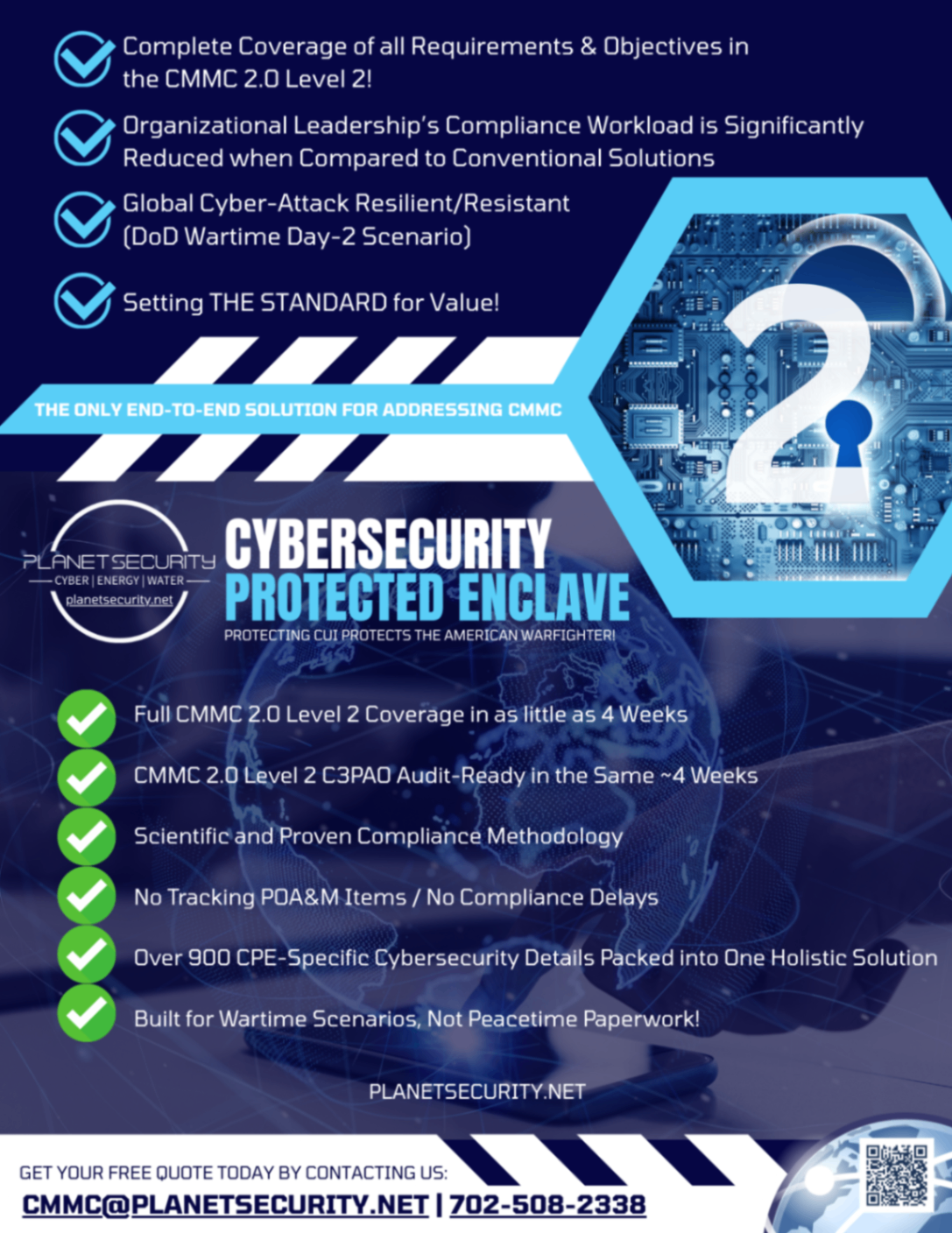
Our CPE Level 2 doesn't just give you a policy; it enforces the technical controls. It’s hardened by design, meaning the system physically prevents you from being non-compliant with those 110 requirements.
6. The "Point-in-Time" Fallacy
Compliance isn't a snapshot; it's a movie.
Many contractors think that because they were "secure" last Tuesday, they can sign the attestation today. But CMMC requires continuous monitoring. If a patch fails on Wednesday and you sign your attestation on Friday without fixing it, you are technically out of compliance.
You need a solution that offers wartime readiness. We provide global dynamic threat blacklisting and continuous monitoring so your security posture is always "on."
7. DIY Assessments Without Expert Validation
Self-assessment is the fastest way to get a DOJ audit. Why? Because we all have blind spots.
Contractors often "interpret" the 320 objectives in a way that favors them, only to have a C3PAO (Certified Third-Party Assessment Organization) or the DIBCAC tear it apart later. There is simply not a more comprehensive offering than the CPE Level 2 for removing the guesswork. We provide a scientific compliance methodology that has been battle-tested.
How CPE Level 2 Solves the Attestation Nightmare
The CPE Level 2 is designed to take the legal weight off your shoulders. We don't just "help" you get compliant; we provide the entire infrastructure.
What you get with CPE Level 2:
- 100% Coverage: Every one of the 110 CMMC 2.0 Level 2 requirements is addressed.
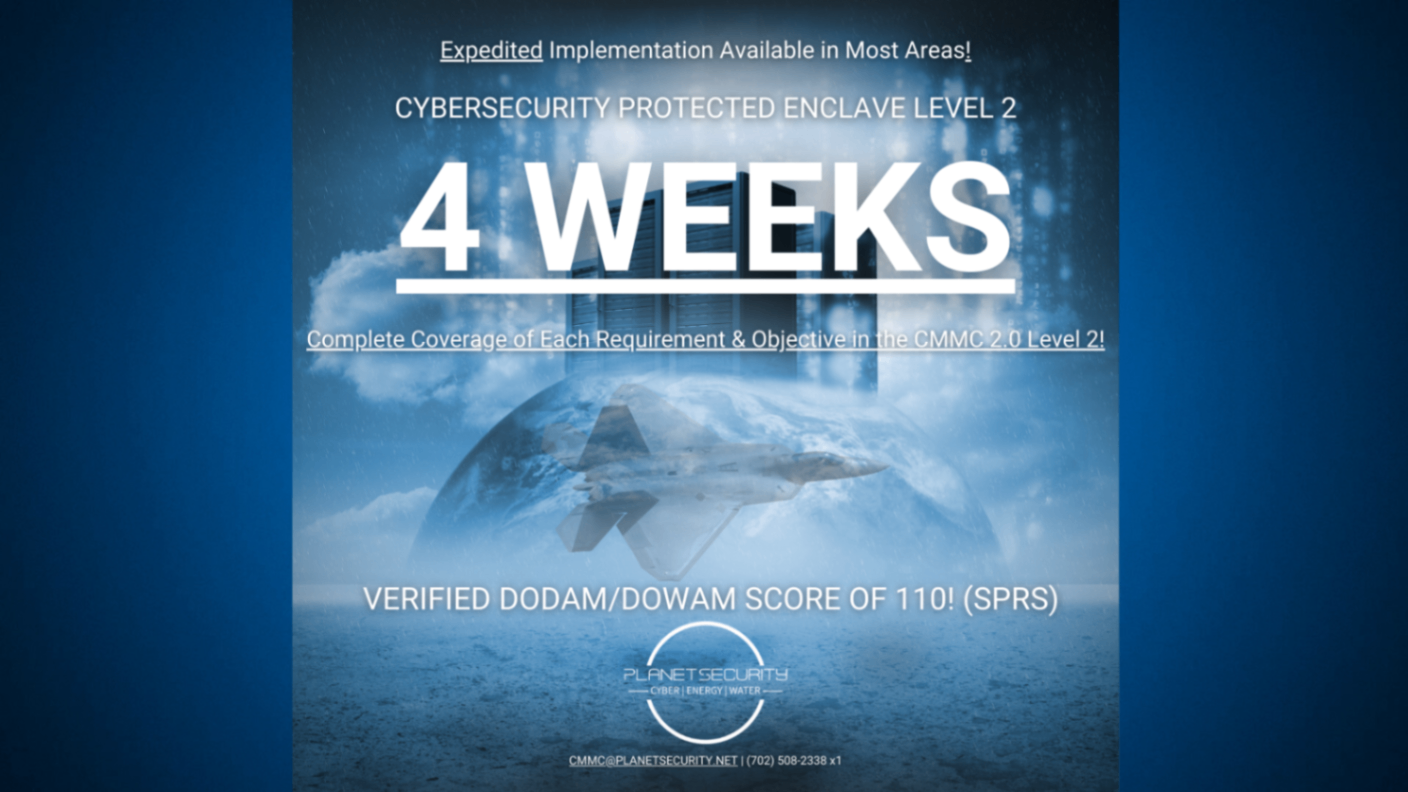
- Audit Readiness in 4 Weeks: While others take 18 months, we get you ready in a month.
- Automated Receipts: Continuous technical security monitoring provides the logs the DOJ demands.
- Zero-Trust Methodology: We assume the network is hostile and protect your CUI accordingly.
- No POA&Ms: We build it right the first time so you don't have to track "plans of action" for months.
Simple, Transparent Pricing:
- $1,299/month for up to 20 users.
- Includes all 900+ hardening steps and 1,500+ use cases.
- Need to save on monthly costs? Choosing an 8-week deployment instead of the standard 4-week sprint reduces your pricing by $100/month.
FAQs: CMMC and the DOJ
Q: Can I be sued if I didn't know we were non-compliant?
A: Under the False Claims Act, "deliberate ignorance" or "reckless disregard" for the truth is enough for a conviction. If you didn't check your logs before attesting, the DOJ considers that reckless.
Q: How does CPE Level 2 protect me from a DOJ audit?
A: It provides the technical evidence. If the DOJ asks how you met Requirement 3.1.1 (Access Control), you don't just show them a piece of paper; you show them the system logs generated by the enclave.
Q: Is this only for large contractors?
A: No. Small and mid-sized contractors are actually at higher risk because they often lack the internal resources to maintain continuous compliance. CPE Level 2 was built to give smaller shops the same "unparalleled security posture" as the primes.
Q: What about my existing IT team?
A: They’ll love it. It reduces their compliance workload significantly, allowing them to focus on your business operations while the enclave handles the heavy lifting of CMMC technical security.
Final Thoughts: Don't Guess with Your Business
The era of "winging it" with CMMC is over. The DOJ is actively looking for contractors to make examples of. An inaccurate attestation isn't just an IT mistake; it's a threat to the survival of your company.
Establish your enclave. Get your receipts. Sleep at night.
We welcome a discussion on how we may assist in your CMMC success story!
Planet Security Inc.
Cybersecurity and IT Compliance Services
planetsecurity.net

(Scan for more information on CPE Level 2)